Measured in Excellence
Excellence is only possible when chemistry, sensory expression, and the health of the land, the trees, and the fruit are all held in balance.
All of it measurable. Verified through accredited laboratory analysis and certified sensory assessment.
Chemical Integrity

Acidity
A baseline, not a measure of excellence. Industry limit: ≤ 0.8% · AG range: 0.09%–0.21%.
Every season is different. Acidity reflects the condition of the fruit before it becomes oil. It is also the most easily achieved number in the industry, and the most easily manipulated.
Through blending or selective dilution, acidity can be lowered without improving the oil itself. Low acidity alone does not indicate excellence. It simply confirms basic competence.
Peroxide Value
Freshness and shelf life. Industry limit: ≤ 20 meq O₂/kg · AG range: 3.9–7.4 meq O₂/kg.
Peroxides measure the earliest stage of oxidation, the most representative parameter of how an oil is actually holding up. It’s also the one the industry rarely discusses. Acidity gets marketed. Phenolic compounds get boosted. Peroxide, in our opinion the number that matters most, almost never appears on a bottle.
Lower values mean an oil earlier in its life, with greater stability and a longer shelf life. This is not about intensity. It is about time, and protection from the moment the fruit leaves the tree.
UV Absorption
Proof of authenticity. Industry limit: K232 ≤ 2.50 · K270 ≤ 0.22 · ΔK ≤ 0.01 · AG range: K232 1.51–1.78 · K270 0.09–0.16 · ΔK consistently under 0.01.
UV values detect subtle oxidation and refining markers invisible to other tests.
Clean readings confirm purity, compliance, and the absence of hidden refinement. These numbers do not trend by accident.
Oleic Acid
Stability and intrinsic identity. Industry limit: Not required · AG range: 73.23%–74.58%.
Oleic acid contributes to longevity, oxidative stability, and nutritional integrity. Many oils fall between 55 and 60 percent, closer to the profile of a seed oil than an olive oil, losing stability and behaving less predictably over time.
Warmer, lower-latitude growing regions consistently produce lower oleic acid. Cooler regions like Tuscany produce more of it.
Phenolic Compounds
Structure, vitality, and perspective. Industry limit: Not required · AG range: 472–668 mg/kg.
Phenolics influence bitterness, pungency, shelf life, and health. The number depends heavily on method, different labs produce different results for the same oil. Ours is verified using the International Olive Council’s own standard for measuring biophenols.
We don’t chase a phenolic number. We chase pleasure, and we stop when the oil tastes the way it should. Even at the low end of our range, that’s nearly twice the recognized threshold for high-phenolic classification, and more than two and a half times at its peak.
Vitamin E (Tocopherols)
Stability and nutrition, together. Industry limit: Not required · AG range: 275–308 mg/kg.
A tablespoon provides roughly a quarter of the daily value for vitamin E, close to double what’s typical of commercial olive oil.
Tocopherols are natural antioxidants that protect the oil from oxidation as it ages, extending its shelf life, while also making it a real dietary source of vitamin E. Like phenolics, the amount is shaped by variety, ripeness at harvest, and how quickly the oil is protected once it leaves the fruit.
Pesticides and Contaminants
Purity beyond certification. Industry limit: Not required · AG average: No detectable residues.
Each harvest undergoes multi-residue testing capable of detecting hundreds of synthetic pesticides and contaminants.
Purity should never be claimed. It should be measured.

Independent Verification
Chemical analysis confirms composition, but classification also requires sensory evaluation.
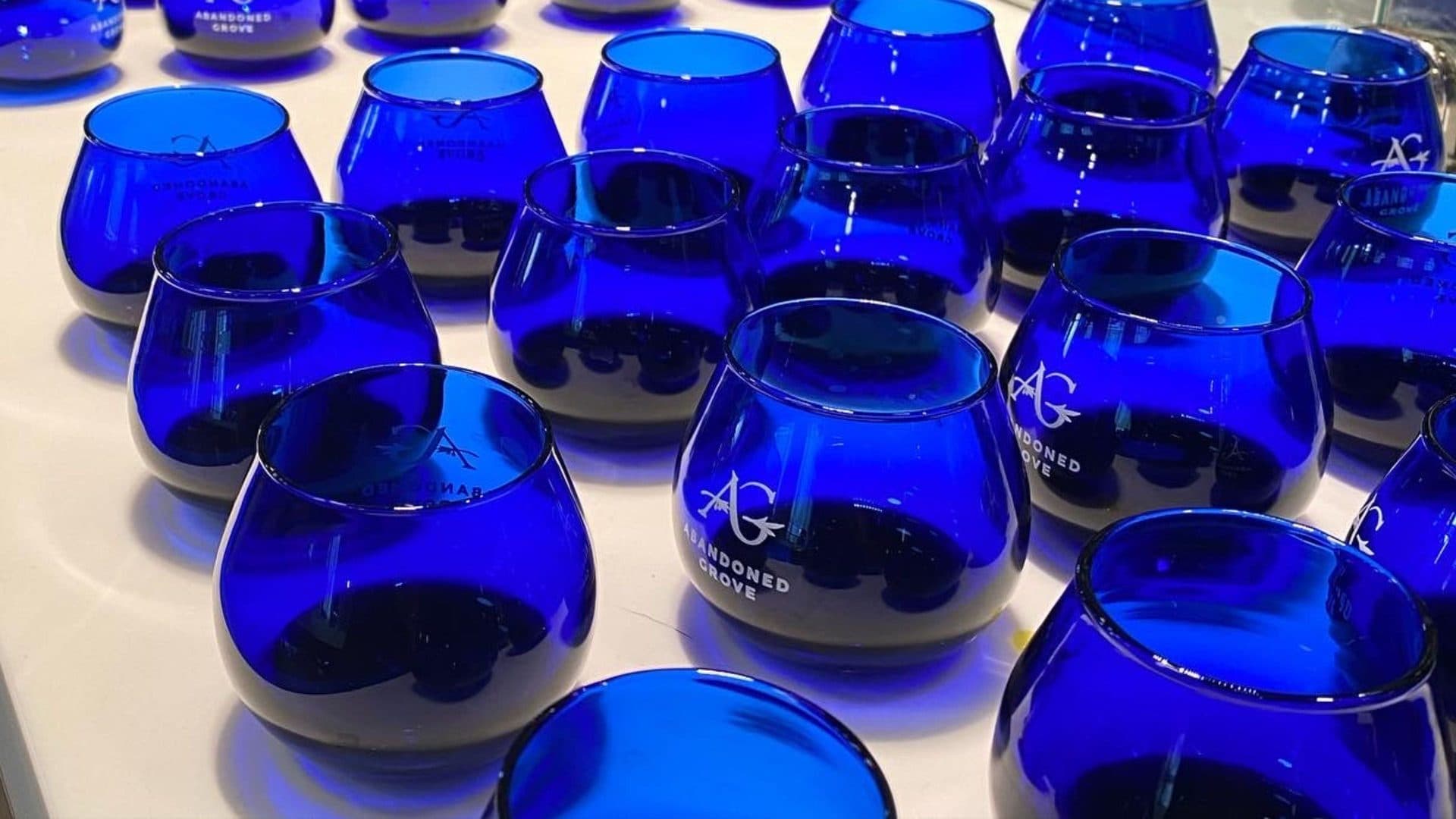
Every harvest undergoes blind tasting by certified sensory panels trained to identify fruitiness, balance, and the complete absence of defects.
Together, laboratory analysis and sensory assessment confirm the oil’s authenticity as true extra virgin.
Every Harvest, on the Record
Each grove’s harvest is measured on its own. When a release is available, its full chemical and sensory record is published alongside it, so what’s stated here as an average can be checked against the specific bottle in your hands.

What the Numbers Reveal
Across every harvest since our inception, the pattern holds. These numbers are the natural outcome of regeneration over extraction, intention over trends, and expertise practiced with patience.
Explore the Groves