The Groves
The Groves
Across Tuscany, abandoned olive groves once left to decline are being restored, tree by tree.


Across Tuscany, many traditional olive groves have gradually fallen out of cultivation.
In these non-irrigated groves, trees are widely spaced, often rooted in steep or difficult terrain. They produce slowly and require careful, manual maintenance.
In a global market that rewards speed, scale, and uniformity, groves like these often struggle to remain economically viable.
As a result, thousands of historic groves have been left untended.
Abandoned Grove exists where restoration and quality meet, bringing neglected groves back into care and allowing their harvest to speak again.
Every grove carries its own fingerprint.
Altitude, exposure, soil, varietals, and microclimates shape how olives grow and how each harvest expresses itself.
These groves are not interchangeable.
Each grove shapes the character of the oil and the limits of what it can produce.

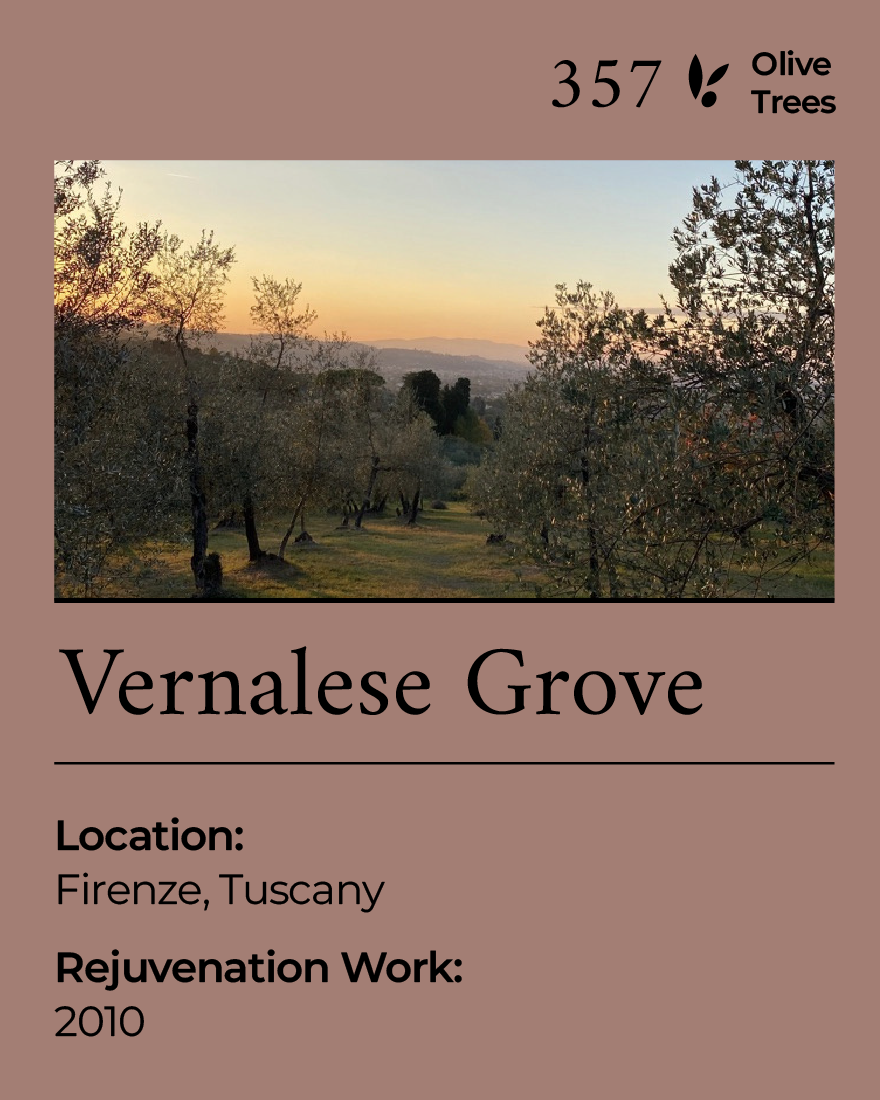
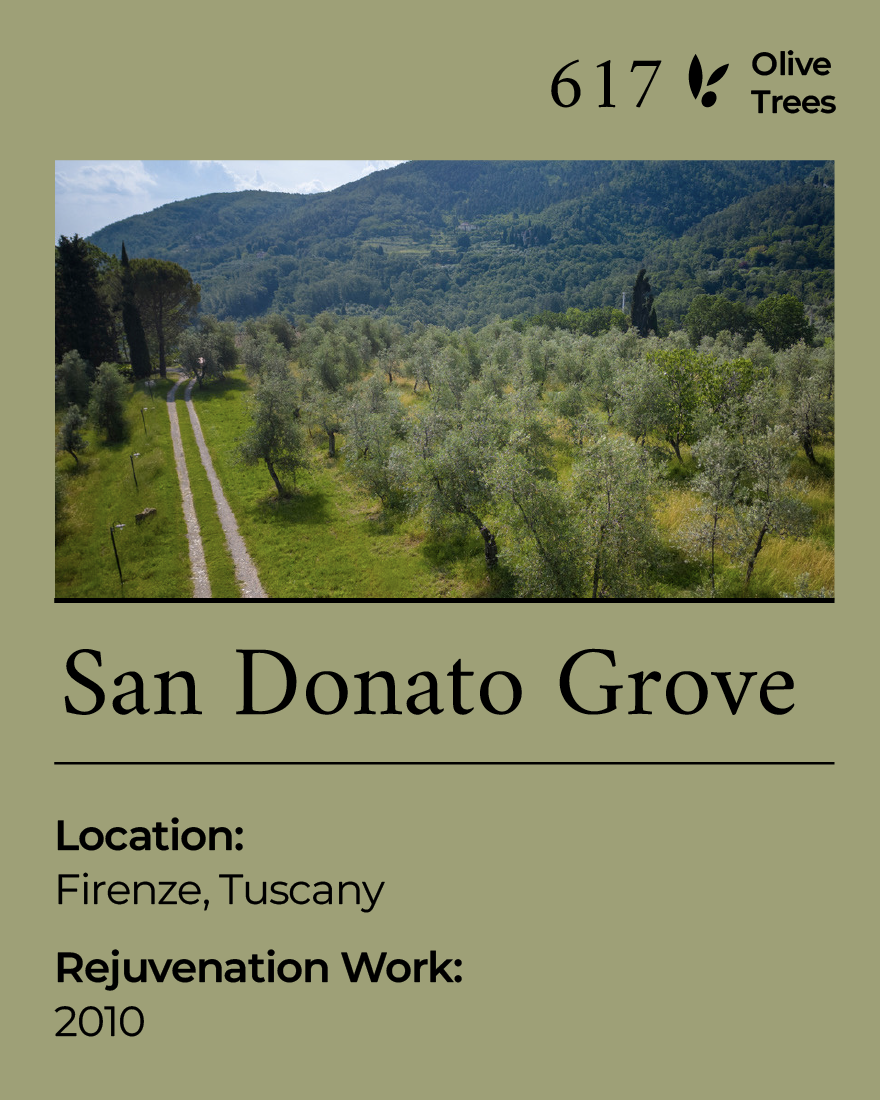
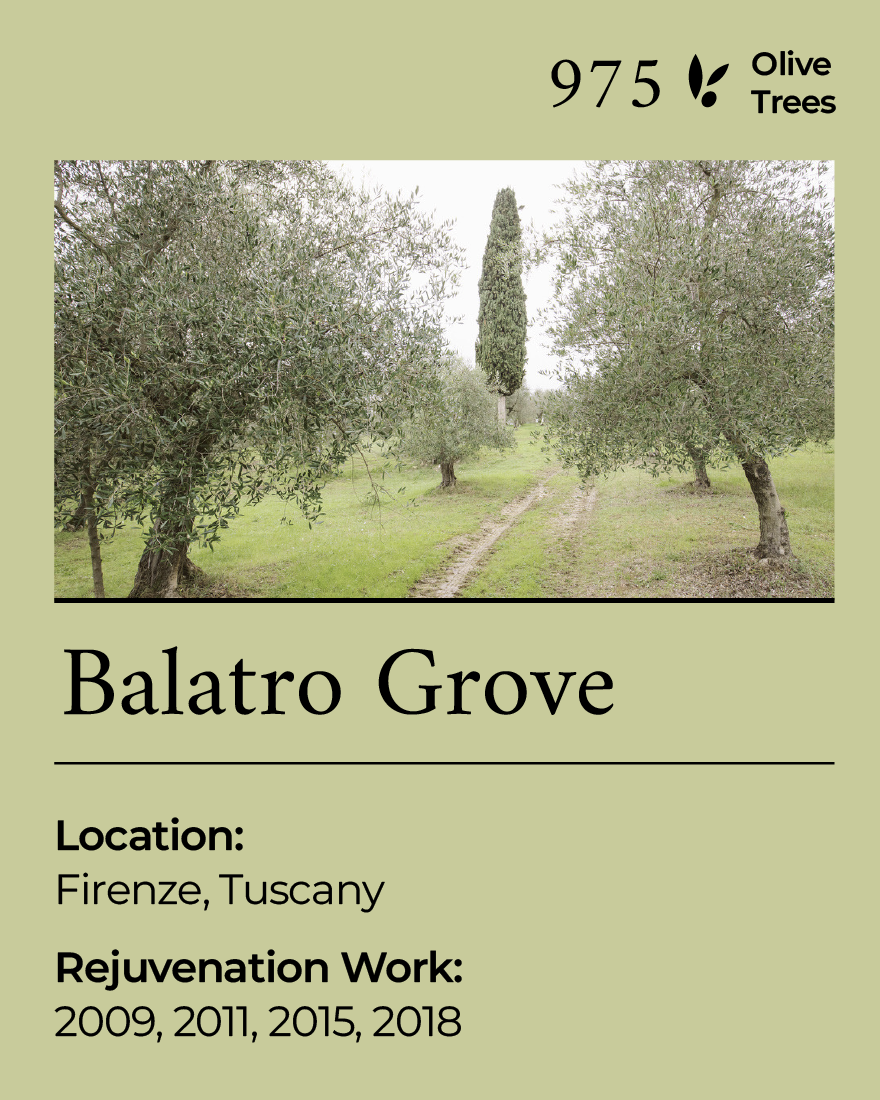
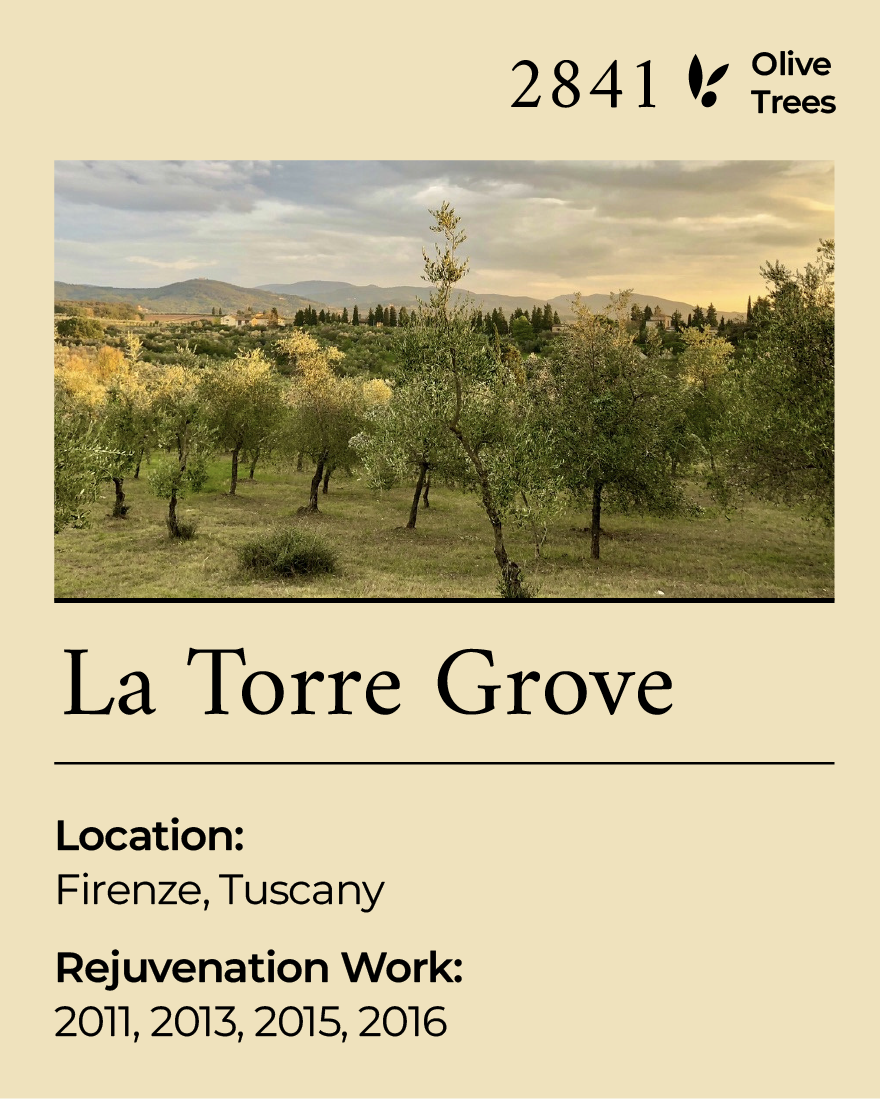
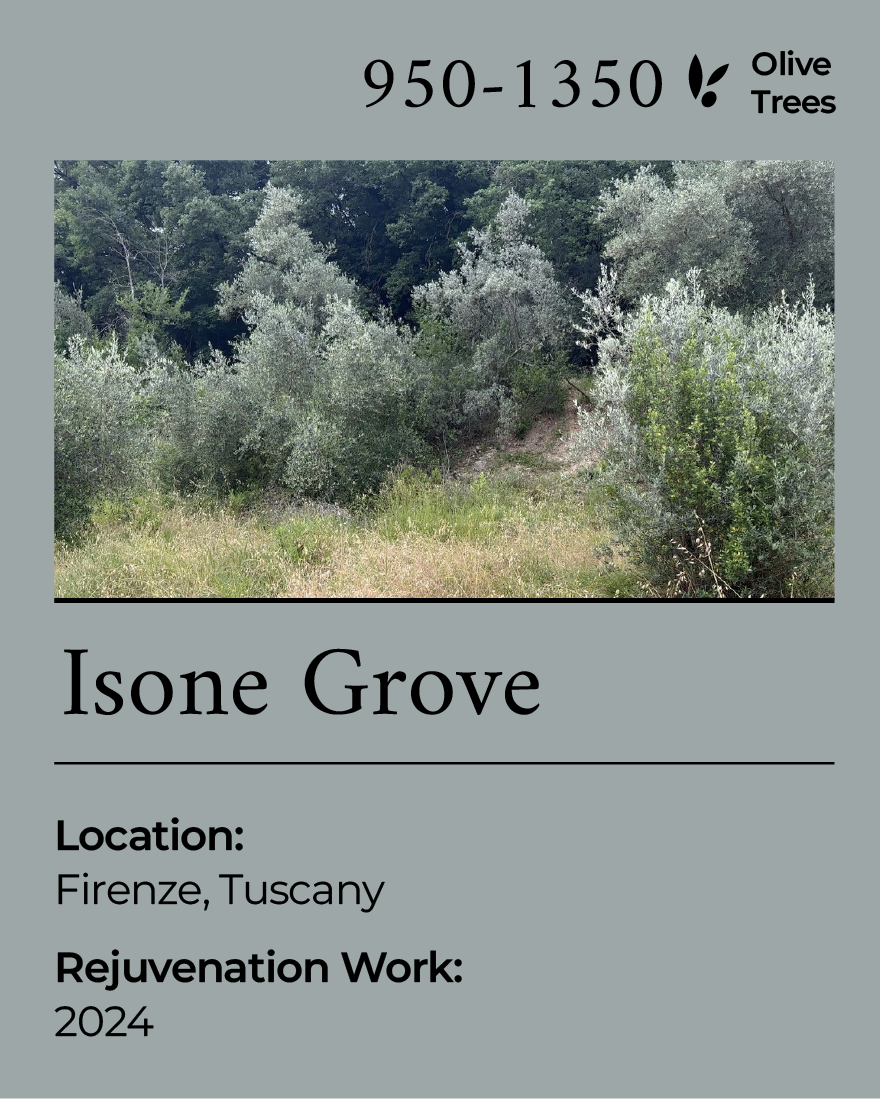
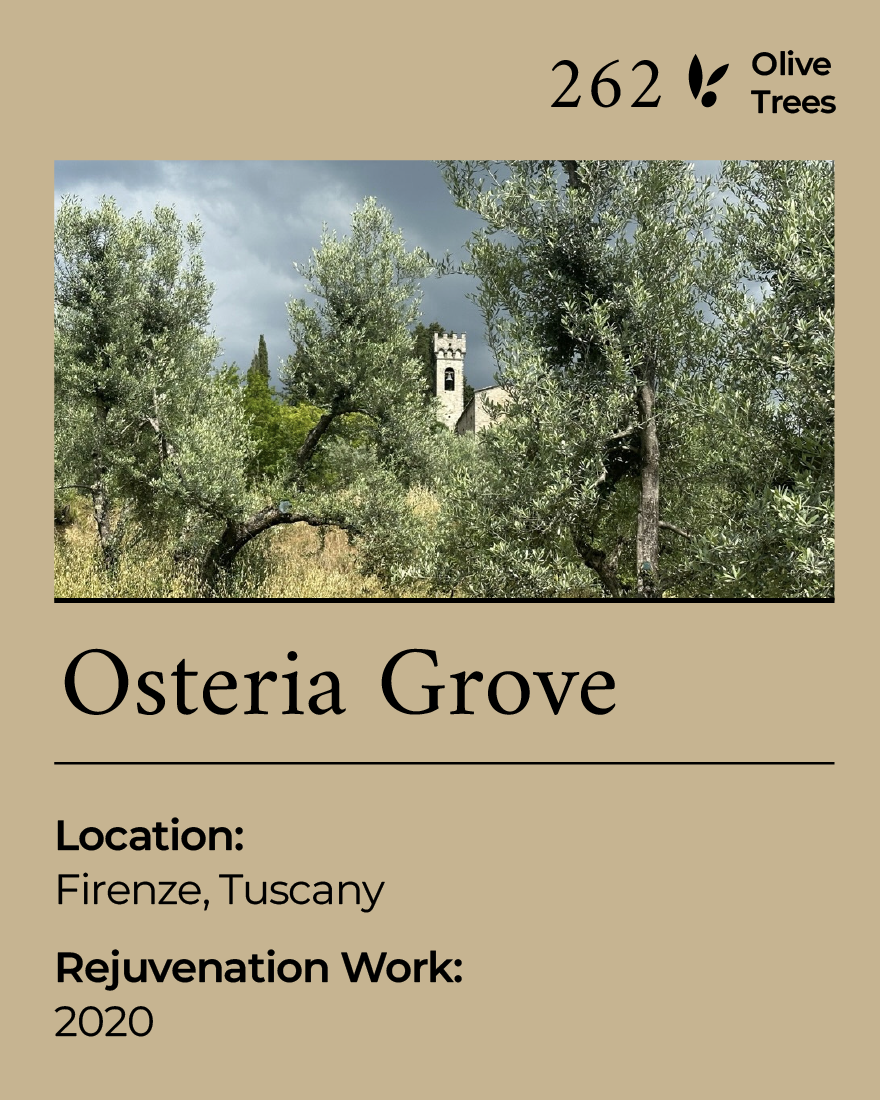
Rejuvenating a grove restores more than trees.
It preserves landscapes shaped by generations of agricultural care.
The work unfolds slowly. Overgrowth is cleared, air and light return to the canopy, and soil health is rebuilt while trees recover strength after years of neglect.
The first harvest may take several seasons. Even then, yields remain naturally modest as the grove returns to balance.
This is not industrial agriculture. It is a long-term restoration carried out one grove at a time.


Each grove contains a finite number of olive trees.
The health of the trees, the soil, and the natural rhythm of the harvest determine how much oil these groves can produce.
Because of this, guardianship remains limited by the biological capacity of the groves themselves.
When every tree within a grove has found its guardian, that grove closes, and its harvest remains with those who care for it.